
•••
Ethos helped Hamlet bring its civic technology into community spaces through experiences that made it easier for people to discover, understand, and engage with local government decisions.
Hamlet uses AI to make public government meetings easier to search, understand, and follow. Ethos helped Hamlet bring that technology into community-specific experiences, making it easier for people to discover, understand, and engage with the local decisions shaping their communities.
Local government decisions shape the places where people live, work, and build their communities. But while the meetings where those decisions are made are public, they can be long, complex, and difficult to find, follow, and understand.
For student clubs focused on urban planning, Hamlet became a hands-on exercise where people could follow a real city decision and explore it through frameworks like land use, equity, sustainability, feasibility, and community engagement. For grassroots groups focused on community service, Hamlet became a resident-facing guide that helped people understand local decisions around housing, traffic, parks, public safety, budgets, sustainability, schools, local businesses, and community services. Together, these experiences gave different communities new ways to understand and engage with the local decisions that affect them.
Ethos helped Hamlet reach communities that were already connected to local decision-making in different ways. Student clubs focused on urban planning were learning how cities are planned and shaped, while grassroots groups focused on community service were working to understand and improve the places they live. These experiences gave people a relevant way to discover and understand what Hamlet offers. For students, that meant encountering Hamlet as a practical civic technology they could carry into future work in planning, civic professions, real estate, or policy. For community groups and residents, it created a way to stay informed, understand the decisions affecting their communities, and advocate more effectively around the issues they care about. The experiences also gave people a reason to share Hamlet with others, stay connected, and continue engaging beyond the initial experience.
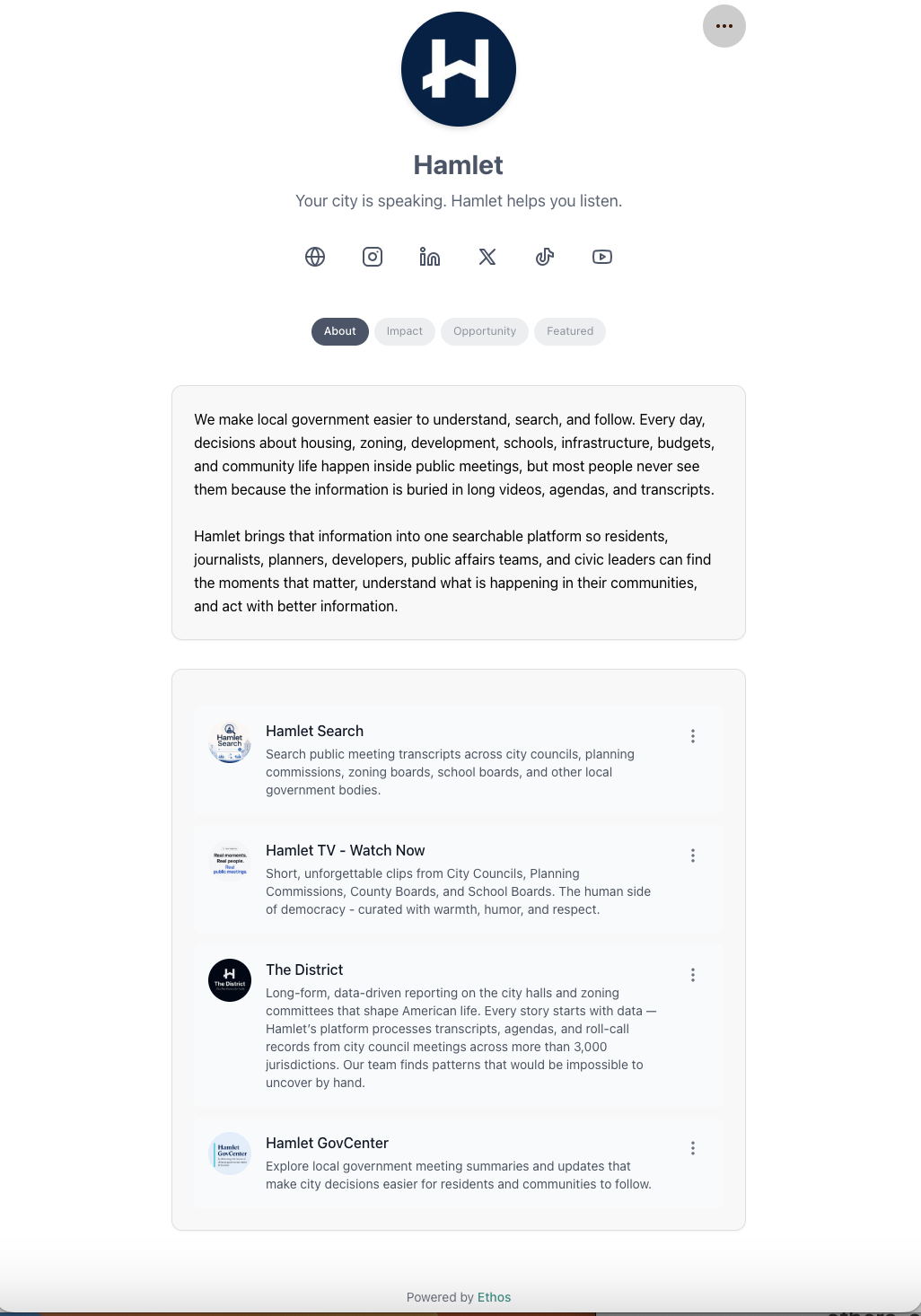
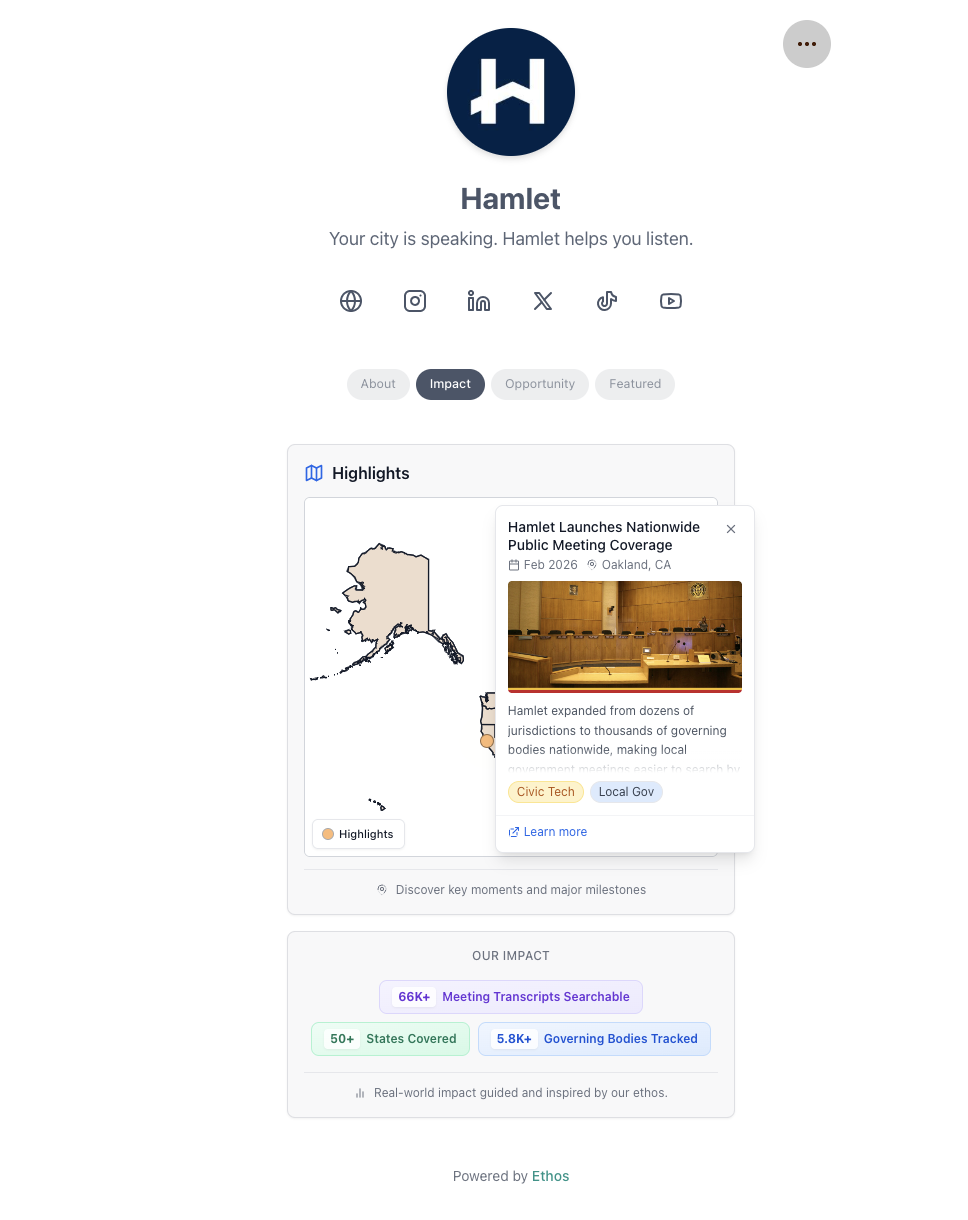
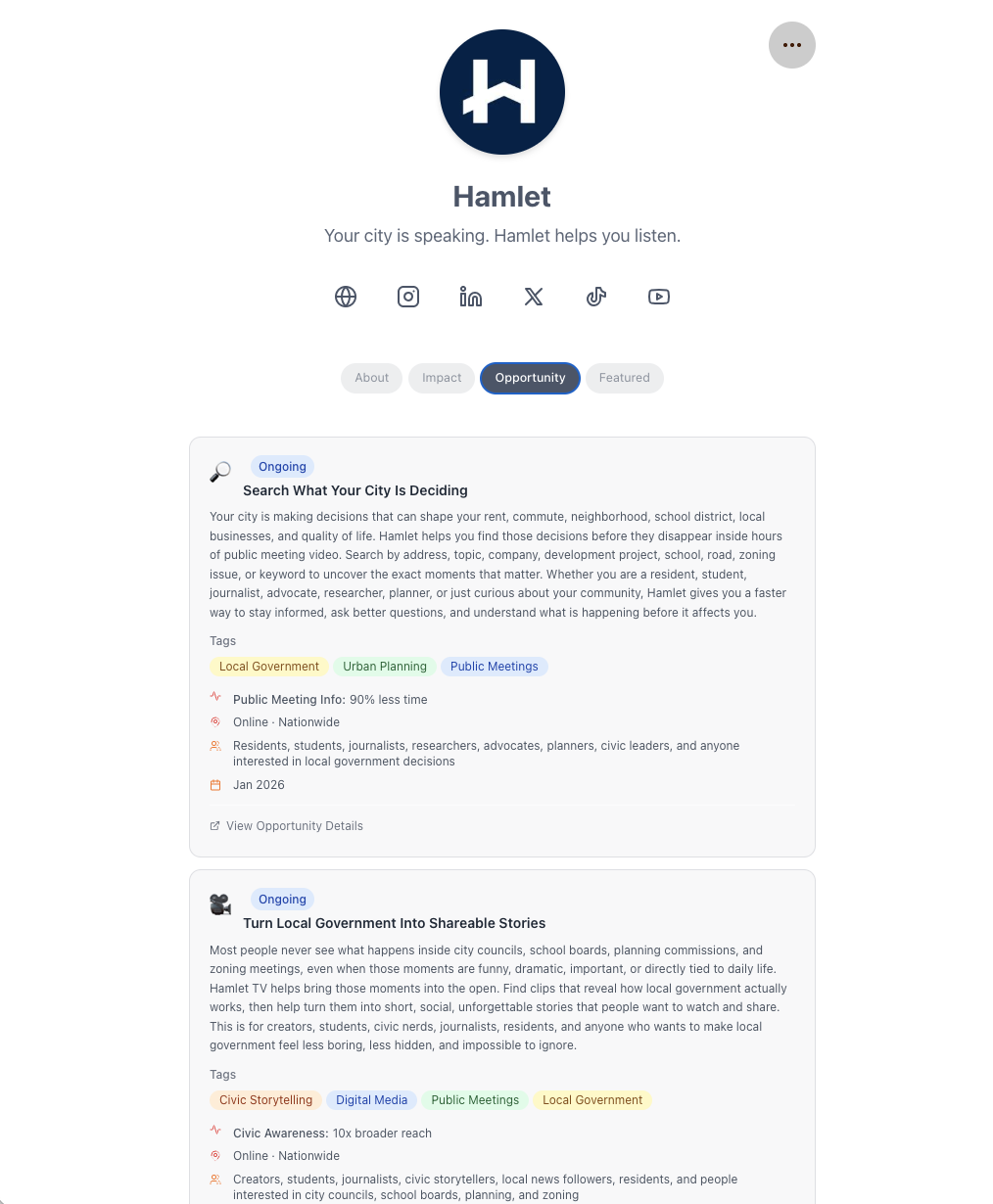
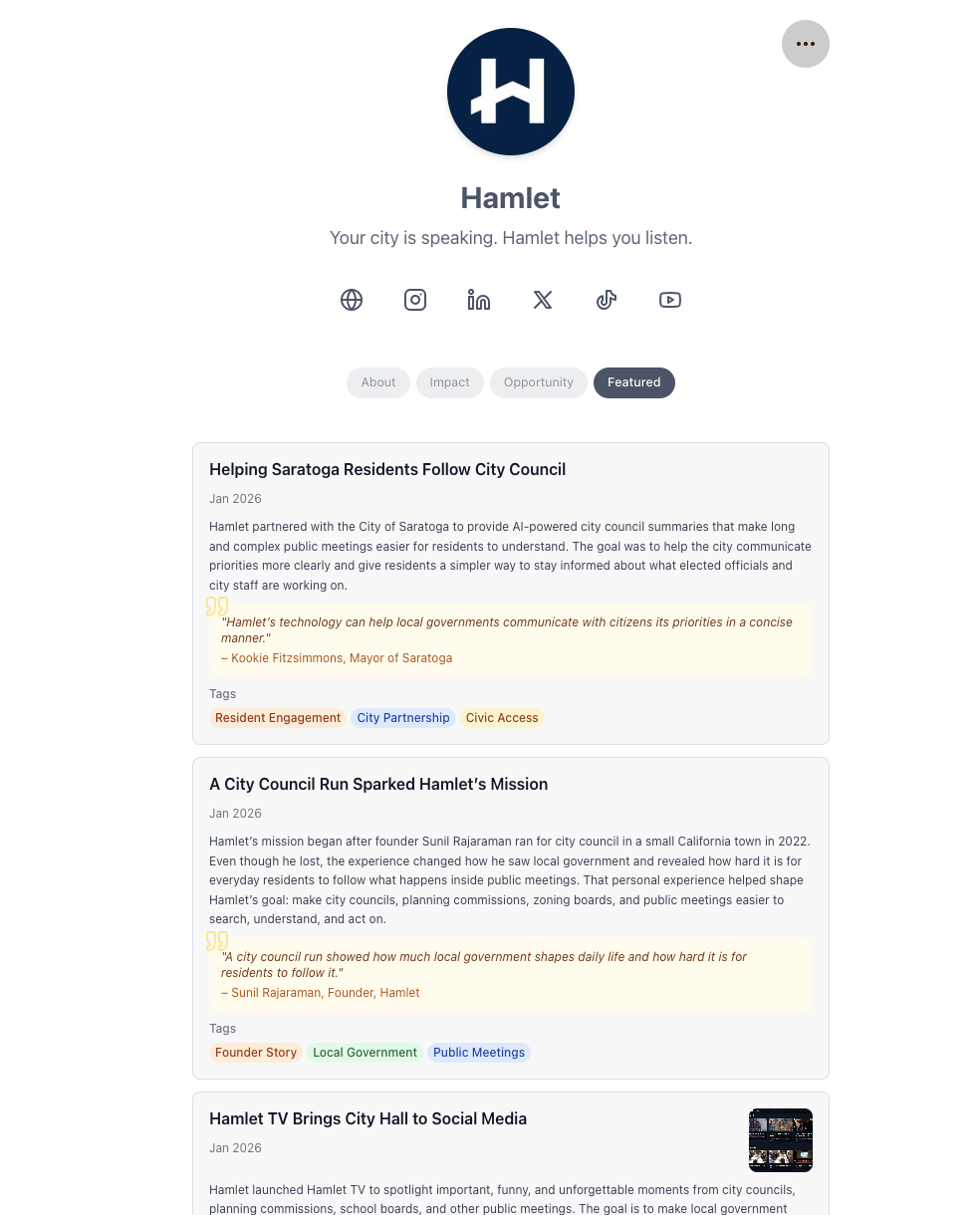
An Ethos profile that explains what Hamlet does, why it matters, and how people can explore its civic technology.
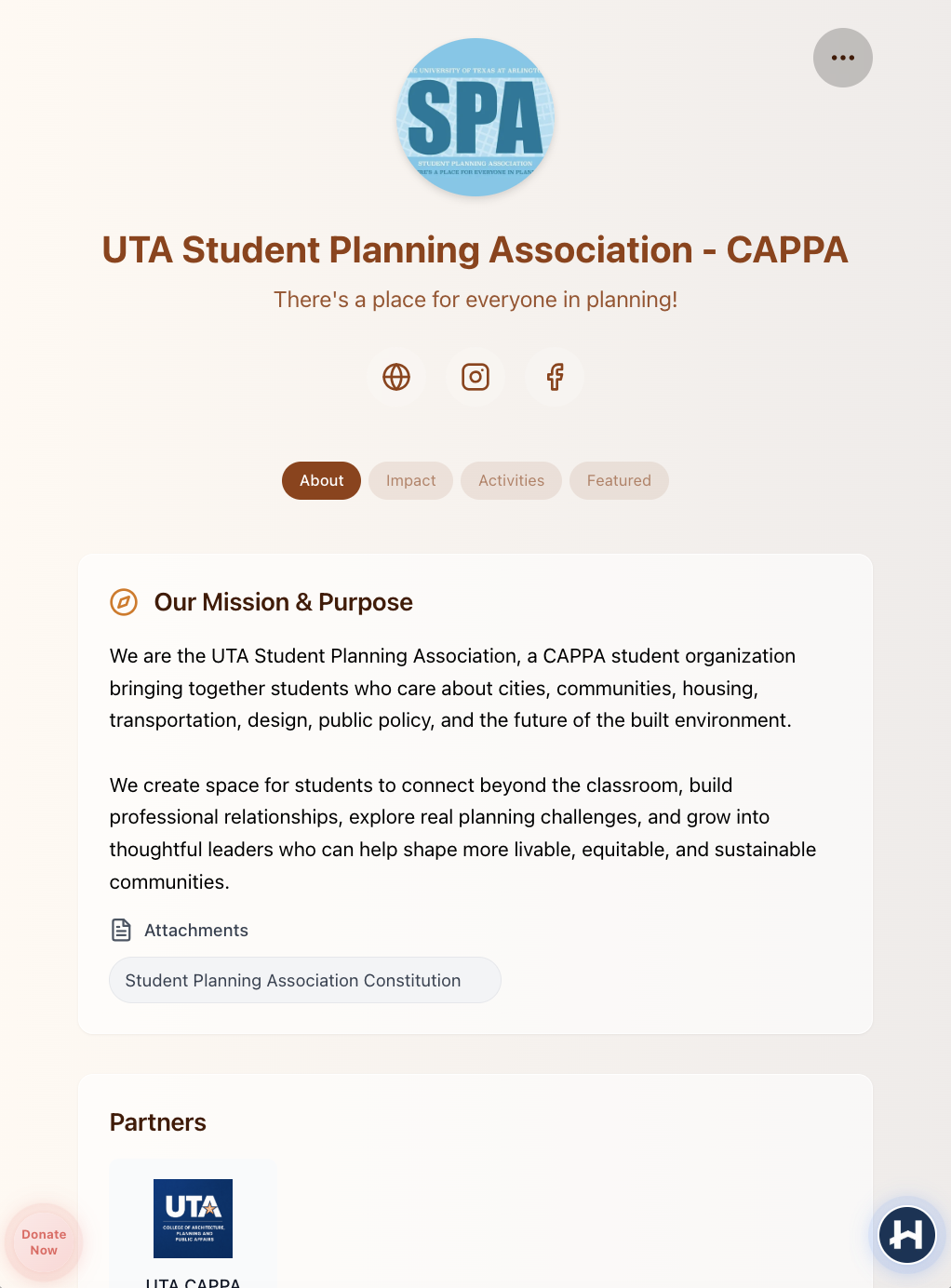
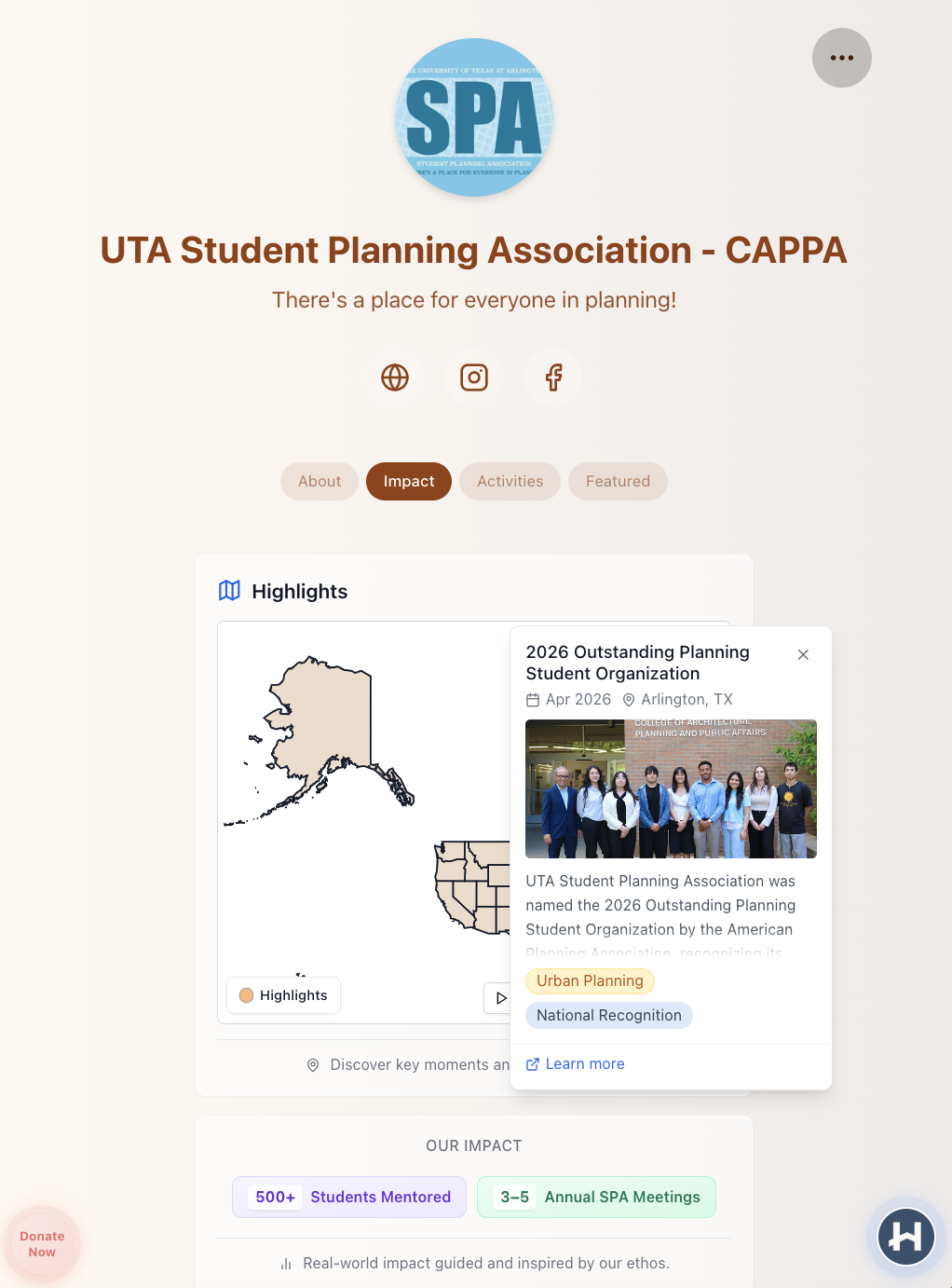
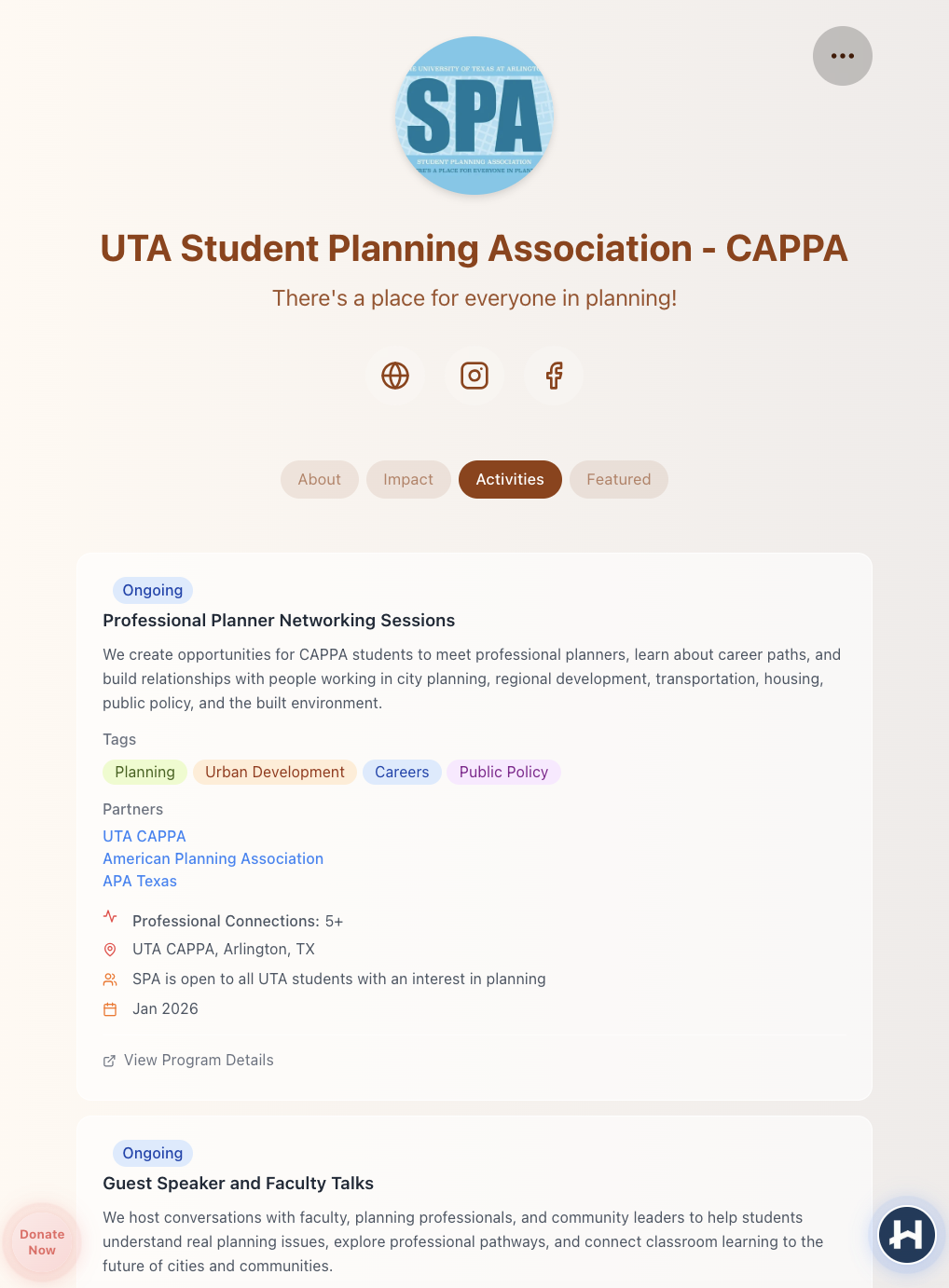
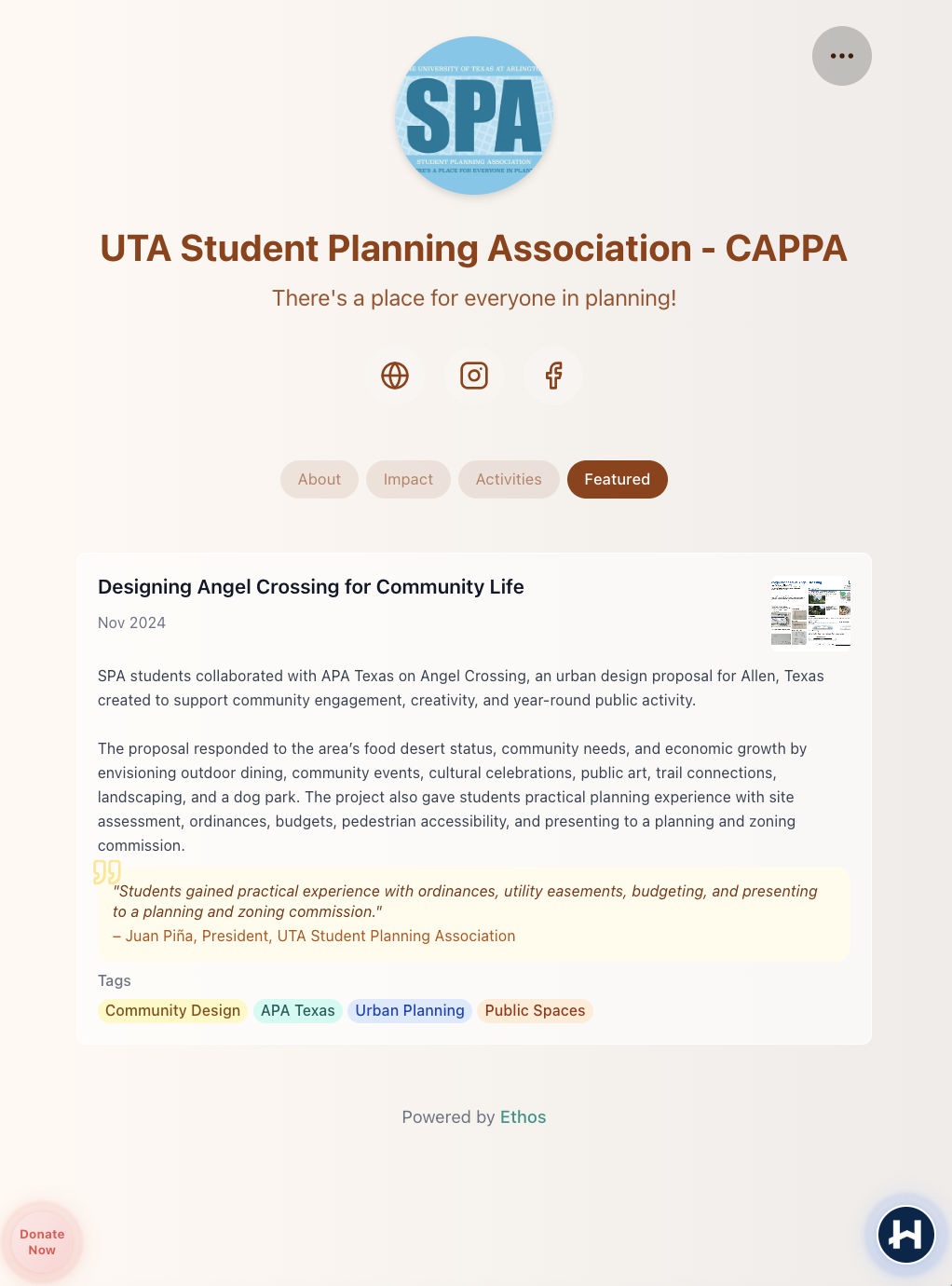
A planning challenge that introduced Hamlet as a practical tool for following public meetings and exploring real city decisions.
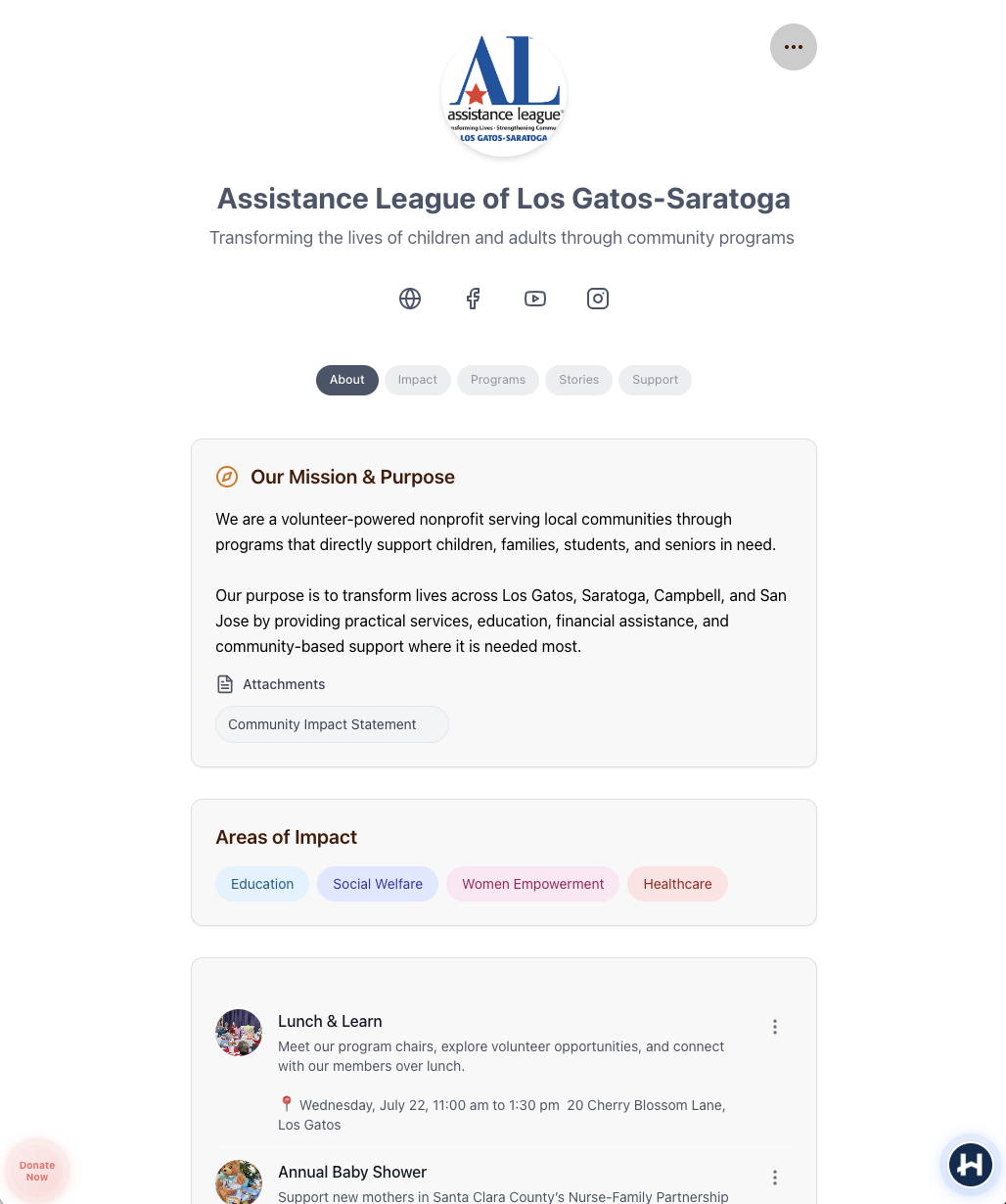
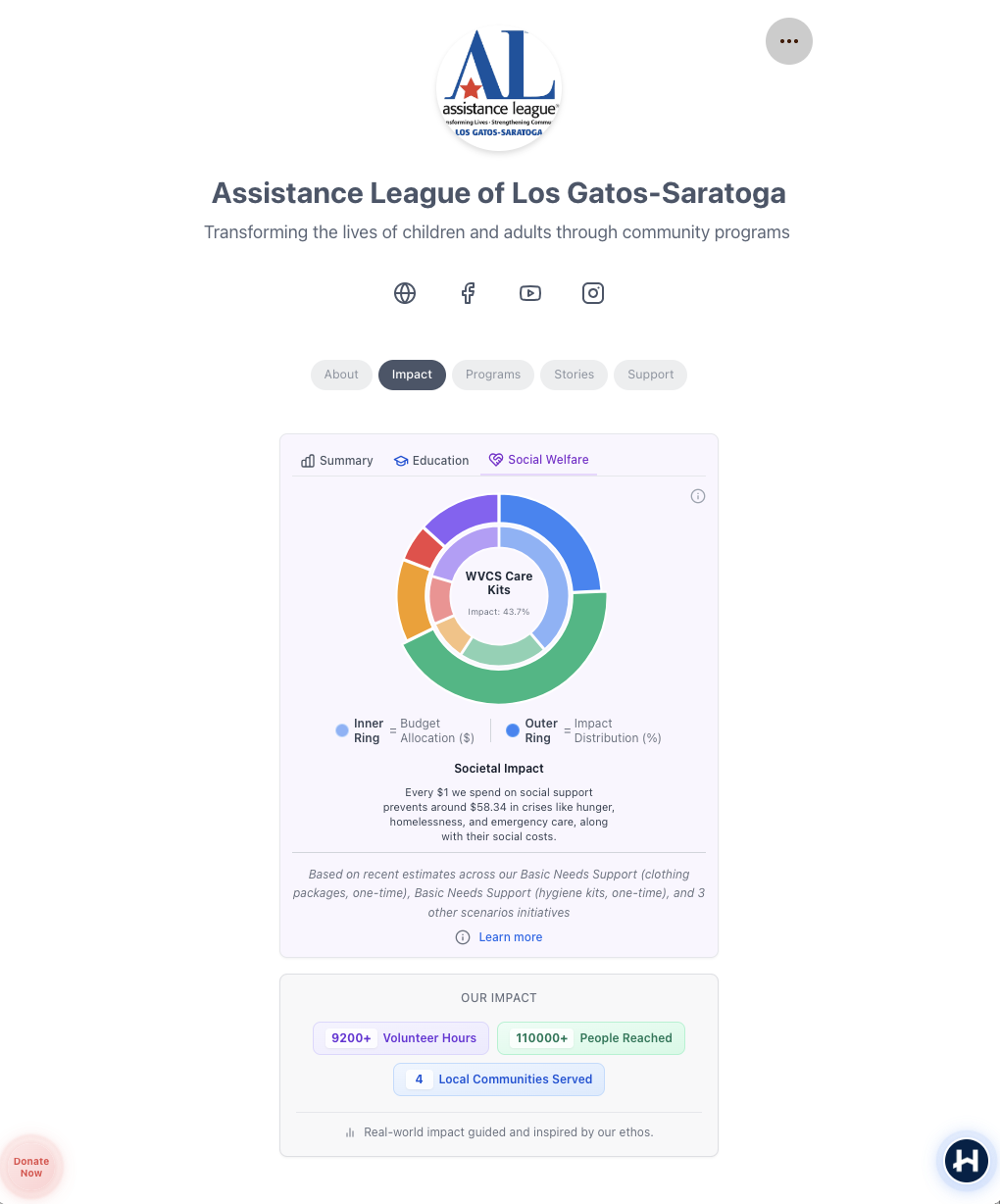
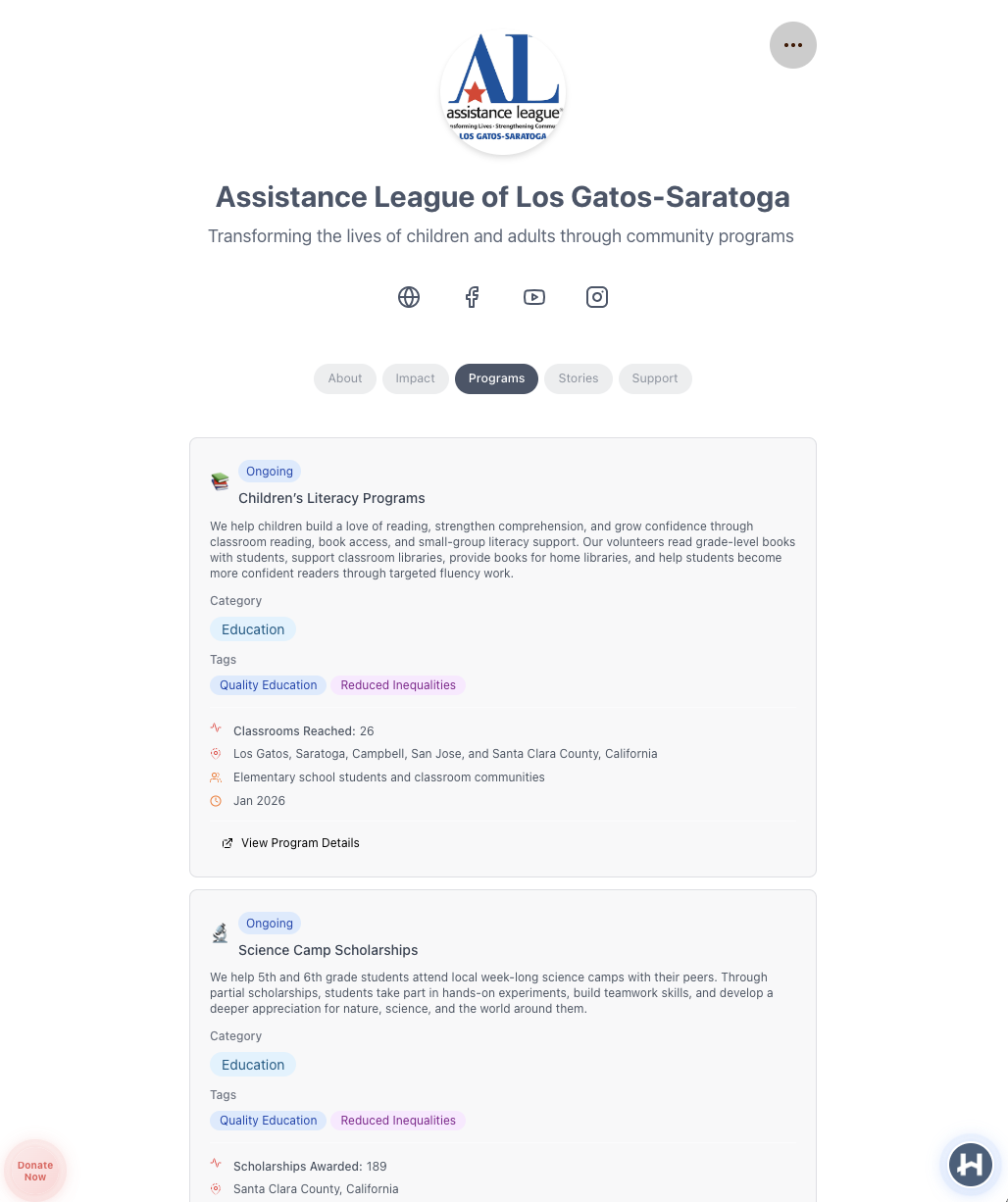
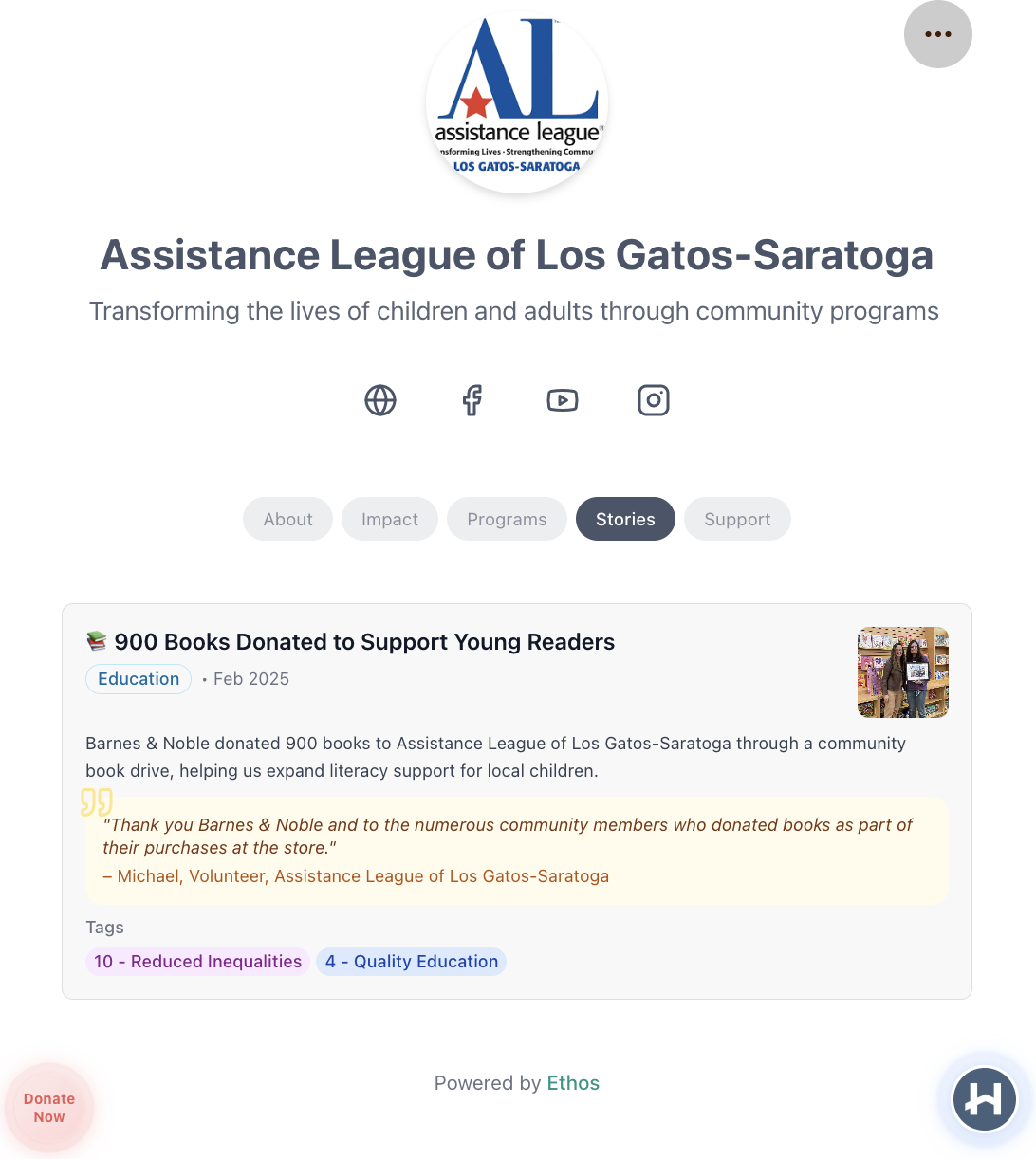
A resident-facing Hamlet experience that helped people stay informed about local decisions affecting housing, traffic, parks, budgets, sustainability, and public services.
Turn your story, initiatives, and opportunities into experiences tailored to the communities you want to reach.